From Leadership to Healership – What an African Elder Taught a Room of European Weavers [#42]
Ubuntu, becoming naturalized to place, and why I’d lead my old lacrosse team differently today.

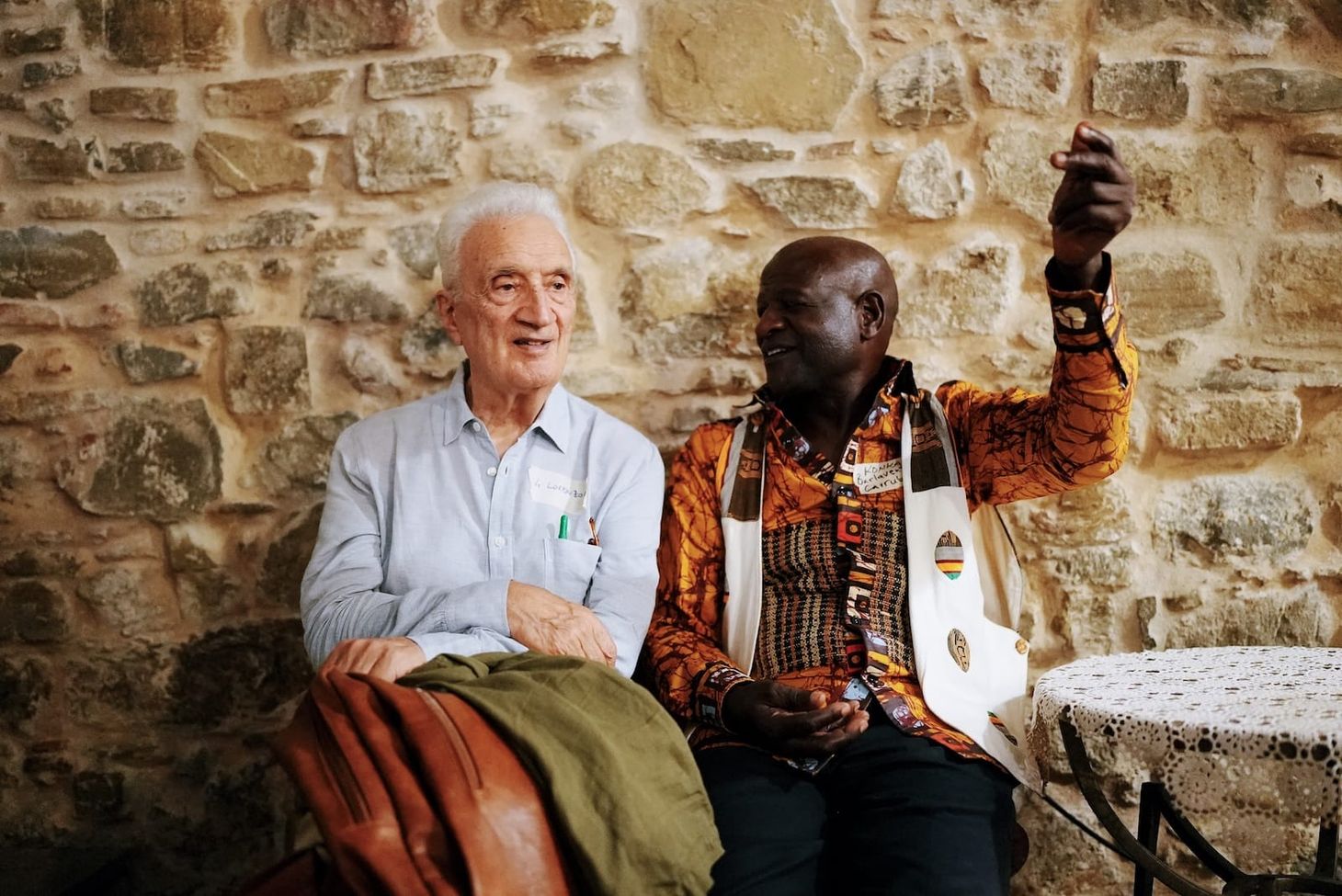
Table of Contents
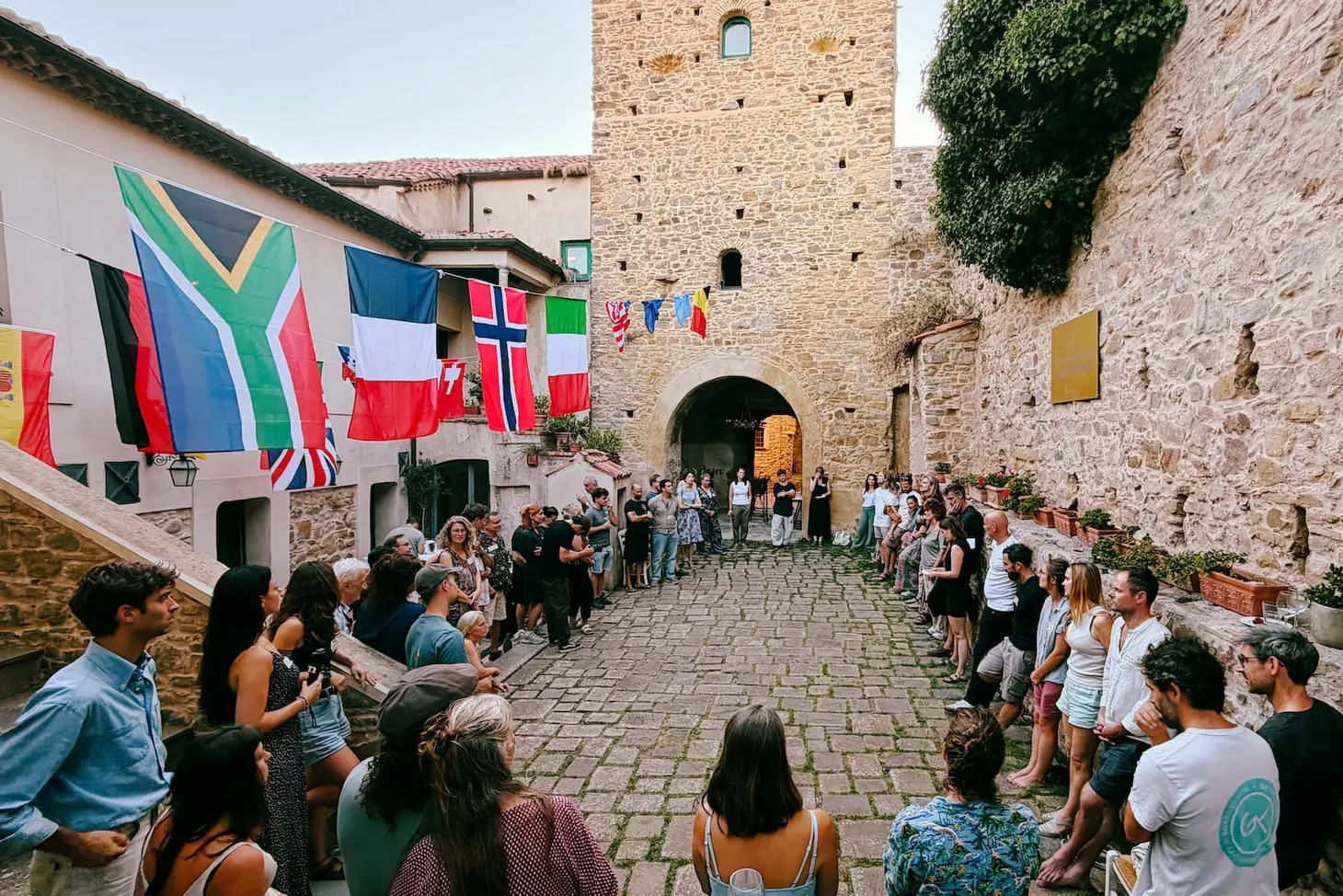
It was a beautiful setting. Right by the sea in Cilento, Italy, under a pergola that was overgrown to give some shade. It was the kick-off of our Bioregional Weaving Labs (BWL) cohort, a year-long program for teams working on the regeneration of their bioregion, a region shaped by its rivers, soils, and ecosystems.
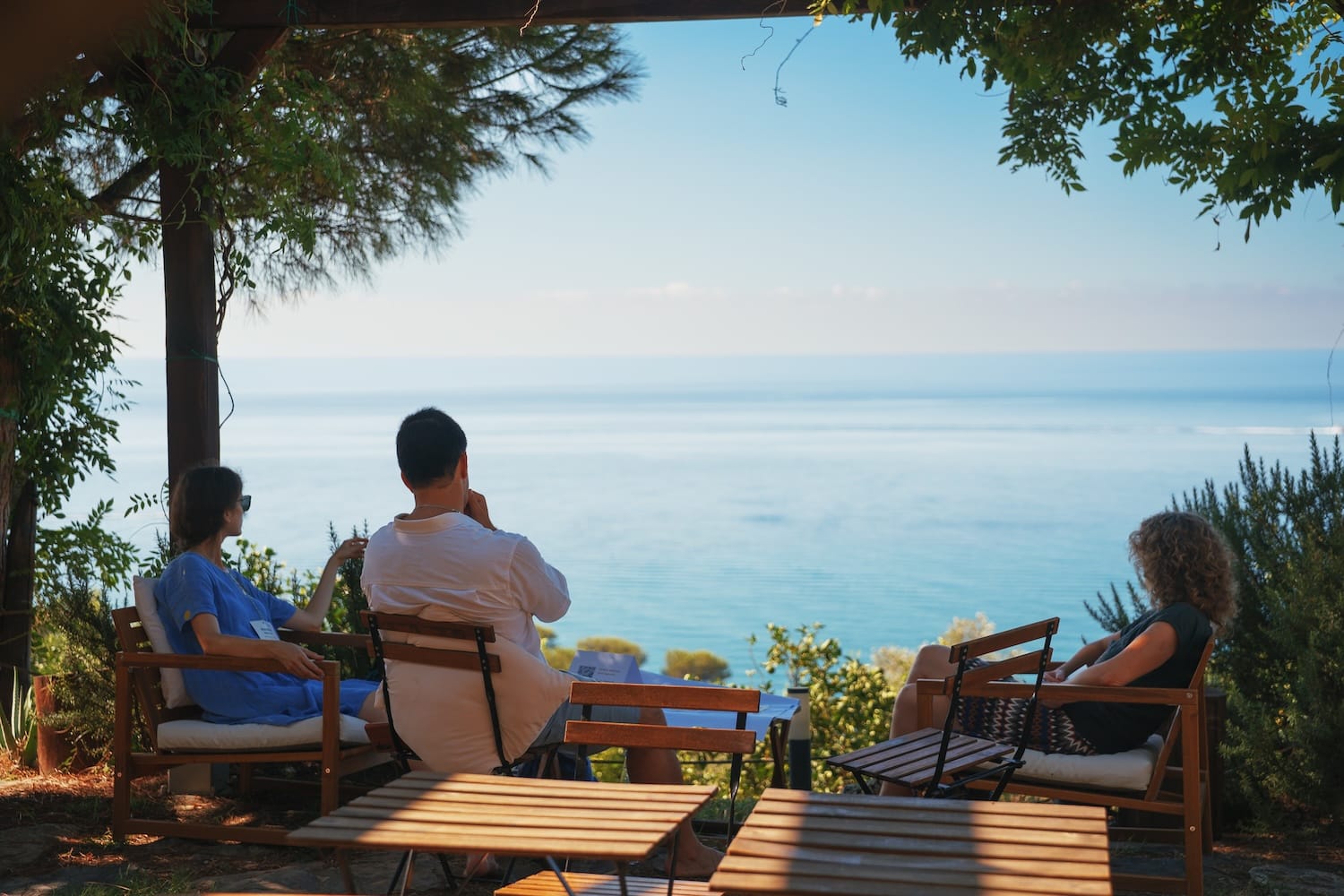
We were about to start the case clinics, sessions where the group works through one bioregion's live problem together.
But during our check-in, where we shared how we felt that morning, something was a bit off.
Joshua Konkankoh, an elder from Cameroon who now lives in the south of Portugal, was struggling to find the words. He seemed sad. He said it was hard for him to express his concept in a Western language.
Nobody said it out loud, but we all sensed the same thing: we needed to give him space. So we switched the case and gave him the floor. We tried to listen from the heart to really understand.
Konkankoh co-founded the African Peace Village near Burgau, in the western Algarve, which joined the cohort in September. He founded the Ndanifor Permaculture Ecovillage in Cameroon and is an ambassador for GEN Africa, the African branch of the Global Ecovillage Network.
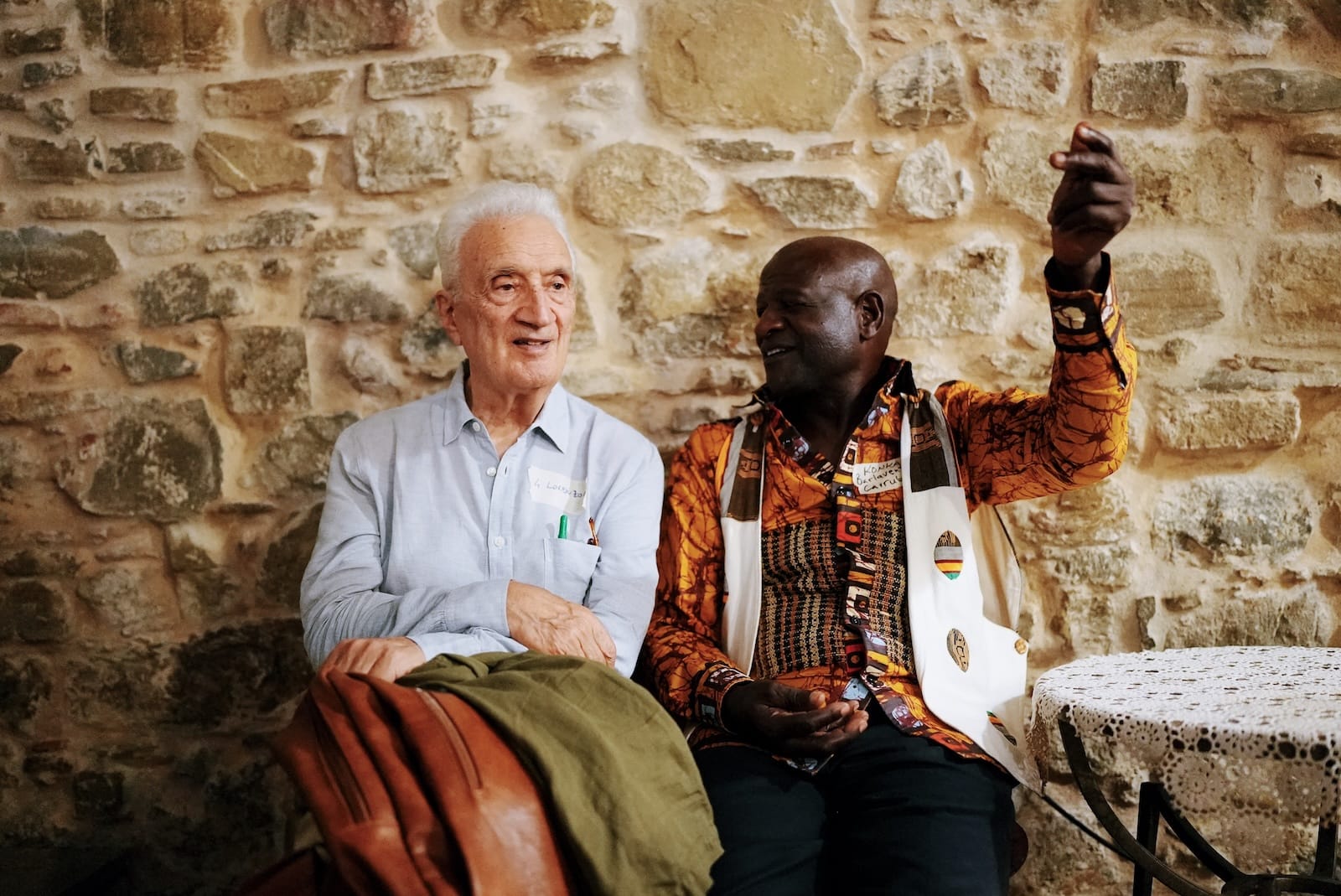
That session and his presence gave rise to a concept I'd been circling for a while: healership.
Where leadership puts someone in front, with others following, healership is tending the relationships and the land, so the whole gets well. It's a shift from the hero's journey to systemic health.
Words only carry so much
That day Konkankoh reminded us how limited words are, and how much our language is shaped by left-brain, Western thinking.
What came across clearly was his sadness at not being able to say what he meant. The room understood that before anyone could have explained it.
We need to relearn that there are different ways of understanding that are not related to words.
It's the awareness in sensing the room. It's feeling what has been left unsaid. It's connecting to yourself and how you feel, not what you think.
A person is a person through other people
Konkankoh's village carries the spirit of Ubuntu. The Nguni phrase from southern Africa, "umuntu ngumuntu ngabantu," describes it: a person is a person through other people.
It means you exist through your relationships to people, to ancestors, and to land.
That's close to what we call weaving at the Bioregional Weaving Labs: connecting the people of a bioregion towards more coherence. Most of that work happens in relationships, so the relationships come first.
Konkankoh shared how it used to be in his ecovillage. The different generations lived together, and the elders, with their wisdom, helped the younger people grow into adults.
Compare that to how we treat our elderly.
In Germany, where I grew up, many old people are lonely, and we put them in elderly homes and visit every once in a while.
Here in rural Galicia, many villages are now mostly old people, a lot of them living alone, while their children have moved to the cities.
Imagine all the knowledge that is lost through this disconnection and the sadness of being lonely.
I often think about combining elderly homes with foster homes. The young people would be able to learn from the wisdom of the older people, and the older people would be less alone and feel younger when exposed to children's vitality.
Becoming indigenous to place
Reflecting on these conversations later, I came to the insight that we need to become more indigenous again if we are to survive the future.
Indigenous meaning here: belonging to and taking responsibility for a place over generations.
Knowing the weather patterns, plants, and ecosystem of that place, and taking on the role of a keystone species (the one the rest of the ecosystem depends on) to care for it.
My grandparents still lived close to that. My grandma had a huge garden that fed my dad and his siblings. They kept some animals and made "Apfelmus" (apple sauce) from the fruit trees around the house.
Two generations later, I'm relearning what she knew.
That's what I'm doing here in Galicia. I'm learning more and more plants, and luckily I have friends who know a lot.
Jaime and Ana from the Estación Agroecolóxica de Vieiro, an experimental farm for agroecology and cultivated biodiversity, showed me plants that grow here that most of us have never heard of. Like enset, a relative of the banana. You can make flour from it to cook or bake, and it keeps a lot of water for the plants around it.
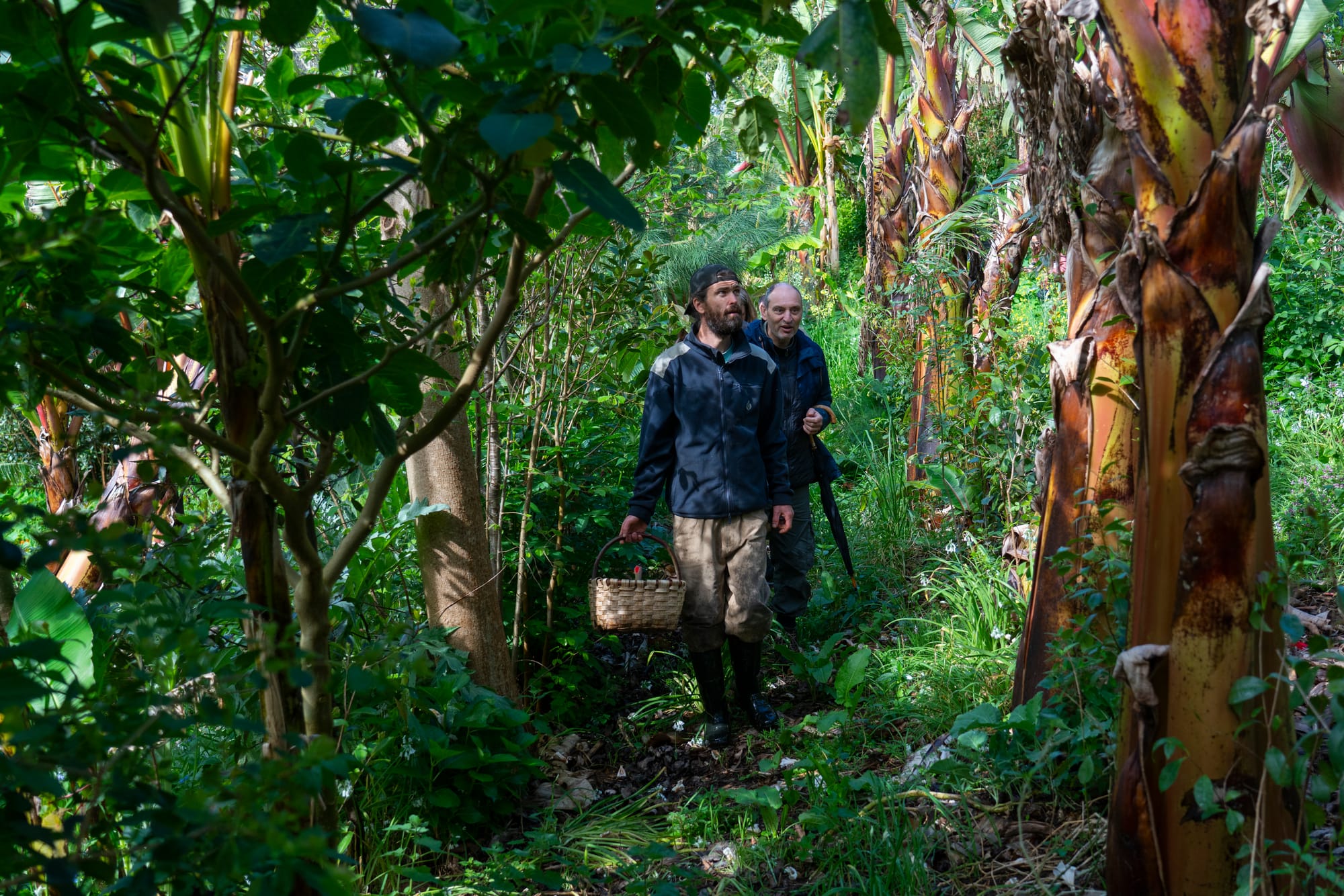
I'm starting to collect seeds, so that once I have access to land again, I can plant them. I'm learning the local dishes, like caldo, the stew that carries everyone through the winter here. I've started eating chestnuts, cooked or roasted. (Funny enough, I live very close to the coast but I haven't eaten fish in a while.)
But there is also a risk that we misuse the word "indigenous". Robin Wall Kimmerer, a Potawatomi botanist and the author of Braiding Sweetgrass, suggests using the words "naturalized to place" instead: like a plant that came from somewhere else and now belongs to the ecosystem.
Giving something back
At BWL, we support place-based change: people rebuilding the economy and the ecology of the region they live in. It's what Indigenous people have done for millennia.
Yet in the cohort, only 2 or 3 people would call themselves indigenous.
I don't think that's an accident. Europe wiped out much of its own nature-based knowledge, through enclosure, industrialisation and centuries of witch trials.
Konkankoh asked out loud whether African indigenous wisdom has a place in the European bioregional movement.
I think yes. We've been so convinced that the Western way is the way to go, and the meta crisis (climate, biodiversity loss, inequality and a loss of meaning, all feeding each other) is showing us it's simply not true.
We have to go back to living among nature, because we are nature.
Who mlii teach us if not people who embody this way, like Konkankoh?
He made a practical case too: A lot of land in Europe is degraded, and few people here want to farm it or take care of it. Many people coming from Africa have a closer connection to land and actually want to do this work.
So how can we support these wisdom carriers?
It starts with listening, even when what they teach confronts our worldview, and thanking them for sharing it. In Cilento that meant dropping our plan for the session so we could listen.
It means honouring the pain that's there, from the global North holding down the global South economically since colonialism.
And it means giving something back, each within our means.
From leadership to healership
Edition 37 asked how to weave without becoming the center. Healership is part of my answer.
The biggest lesson for me: always prioritise the relationship. That is real leadership.
When I led a lacrosse team some years back in another life, I pushed the team a lot. I didn't try to understand where each player was, what kind of healing they needed, or why they were even there.
Today I'd start by understanding the people, and then act accordingly.
I'm sensing the same shift in my work. I've been very outspoken about what we need to do for a sustainable future. Now I listen more to where people come from, and I have more compassion for those who haven't had the same exposure to this knowledge, or the same chances to engage with it, as I have.
I'm realising that healing myself and learning about my ancestors, and Europe's own indigenous past, will lead to better outcomes in the future.
I keep dreaming of planting a food forest where I know the name of every plant, including the medicinal ones ac dkch I can be more community-sufficient in medicine, too.
Try this
How can you go from leadership to healership? What relationships can you tend or heal?
Maybe ask an older neighbour what grows around your place, and what they use it for.
The other day I was at a friend's place, who knows a lot about plants. For the salad, he just walked around outside his house and found 10 different plants to mix together.
That's what I want to get to.
Dandelion is a good first plant to start eating.
P.S.: I’m not the first to use the words. Youssef Mahmoud, a former UN Under-Secretary-General who led peace operations in Burundi, the Central African Republic and Chad, co-wrote From Leadership to Healership in Kosmos Journal (2025) with Joni Carley, Jude Currivan and Grant Storry. Youssef is part of the African Peace Village core team and its peace elder. He and Konkankoh are friends, colleagues, and co-creators of the village, and they’re now building a collaboration on leadership, healership, and eldership.

A Regenerative Life Newsletter
Join the newsletter to receive the latest updates in your inbox.