What You Gain by Reduction – a Year of Degrowth Life [#30]
Learnings from the lived experience of a less materialistic life

![What You Gain by Reduction – a Year of Degrowth Life [#30]](https://images.unsplash.com/photo-1591296638917-36f2aa2d10b7?crop=entropy&cs=tinysrgb&fit=max&fm=jpg&ixid=M3wxMTc3M3wwfDF8c2VhcmNofDEwMHx8ZGUtZ3Jvd3RoJTIwfGVufDB8fHx8MTc3NTY2NjkwOHww&ixlib=rb-4.1.0&q=80&w=1460)
Table of Contents
When people speak about changing lifestyles to live within the biophysical boundaries of planet earth, I often hear the notion that we would need to “go back to living in caves”.
Maybe that idea is fuelled by fear of needing to give up some of the luxuries and privileges that modernity provides to fortunate people in the “Global of the Global North” (the richer people in the global north - top 10% worldwide - that's you reading this.)
I am convinced that we will live more basic lives in the future. Either voluntarily or by necessity, because fossil fuels, which underpin all of our modern luxuries, are running out sooner rather than later.
Over the last few years, as I learned more about the predicament we are in, I have been transitioning away from a material lifestyle towards a “regenerative life” (hence, the name of this publication).
What do I mean by that?
I am moving towards a life that is less materialistic, less individualistic, more community-based, closer to nature, with a felt responsibility to use my agency and power to support the ecological and social regeneration.
You could also call it a degrowth life.
“Degrowth is an academic and social movement aimed at the planned and democratic reduction of production and consumption as a solution to social-ecological crises.
Commonly cited policy goals of degrowth include reducing the environmental impact of human activities, redistributing income and wealth within and between countries, and encouraging a shift from materialistic values to a convivial and participatory society.
Degrowth is a multi-layered concept that combines critiques of capitalism, colonialism, productivism, and utilitarianism, while envisioning more caring, just, convivial, happy, and democratic societies.” - Wikipedia
What does that life look like for me?
I moved to the countryside in Galicia to an abandoned village that dates back to times before the Industrial Revolution. The oldest ruin is said to be about 600 years old.
We live here currently with 8 people full-time, plus friends who come to visit or help for a few weeks or months over the course of the year.
The goal is to rebuild and revive that village and the surrounding 20 ha of land.
We defined our essence as the following:
“An intergenerational, self-sufficient neighbourhood in Galicia rooted in bio-construction, permaculture, regeneration, and seven-generations thinking - cultivating trust, stewardship and fair sharing of resources, while nurturing common spaces and spreading joy and mutual care beyond its borders.”
Next to building this village and community, working on the land or nurturing connections in the bioregion, I work part-time for the Bioregional Weaving Lab and write this newsletter. I have plenty of time to rest and play, too.
During the summer, I live with my partner in a caravan on the land where we plan to build a bio-constructed house made from clay, straw, sand, stones and wood. During winter, we rent a house close by.
While it was a big step to fully move here that involved a lot of uncertainty, I wouldn’t want to change it.
With this article, I want to counter the “degrowth = caves” narrative with my lived evidence of increased well-being through reducing consumption.
Obviously, I am still quite privileged to work remotely and be welcomed on the land without carrying the credit that is used to pay it off (that will change when we build the legal structures to transition it from private-ownership to steward-ownership). And I am still enjoying the perks of a modern society, e.g. the laptop I am writing this on and an internet connection.
It is a process.
Here is my reflection after a full season on the land:
Overall, I feel a lot of joy here. I feel freer, healthier, more connected, and less anxious, and I feel I have more agency over my life.
I am learning so much: about community life, about how to grow a food forest or annual vegetables, the flora and fauna around, the traditions and how people lived here a long time ago. And at the same time, it is also a big challenge to co-steward the community processes and unlearn and relearn how to be in community.
Self-responsibility
Whether it comes to taking care of my needs or making something happen, I feel more responsible for myself. Without the perks of having a lot of money to pay others for work, I am doing most of it on my own (and of course with the help of the community).
I am responsible to act according to how I feel - no one is doing that for me. When I need rest, I take rest. When I need community, I find others or organise a get-together. When I want to listen to nice music, I get my speaker out and mix some tunes on the turntable. If I want to eat vegetables from the garden, I support the garden team in making beds to grow the vegetables.
I feel that in modern life, the average person has become complacent. With cheap energy based on fossil fuels, we have most of the work done for us. We have food delivered to our flat, we buy something with the click of a button, and we have endless entertainment.
There is little need to be self-responsible when everything is handed to you.
But that will change in the future, which will be simpler.
I believe cultivating more self-responsibility is one of the most powerful acts of service to yourself and those around you.
Happiness starts with taking responsibility for your action and the best way to love someone is to take responsibility for yourself.
Like one of the last weekends where we did a work party and I wanted music, so we got out the decks and had some fun:
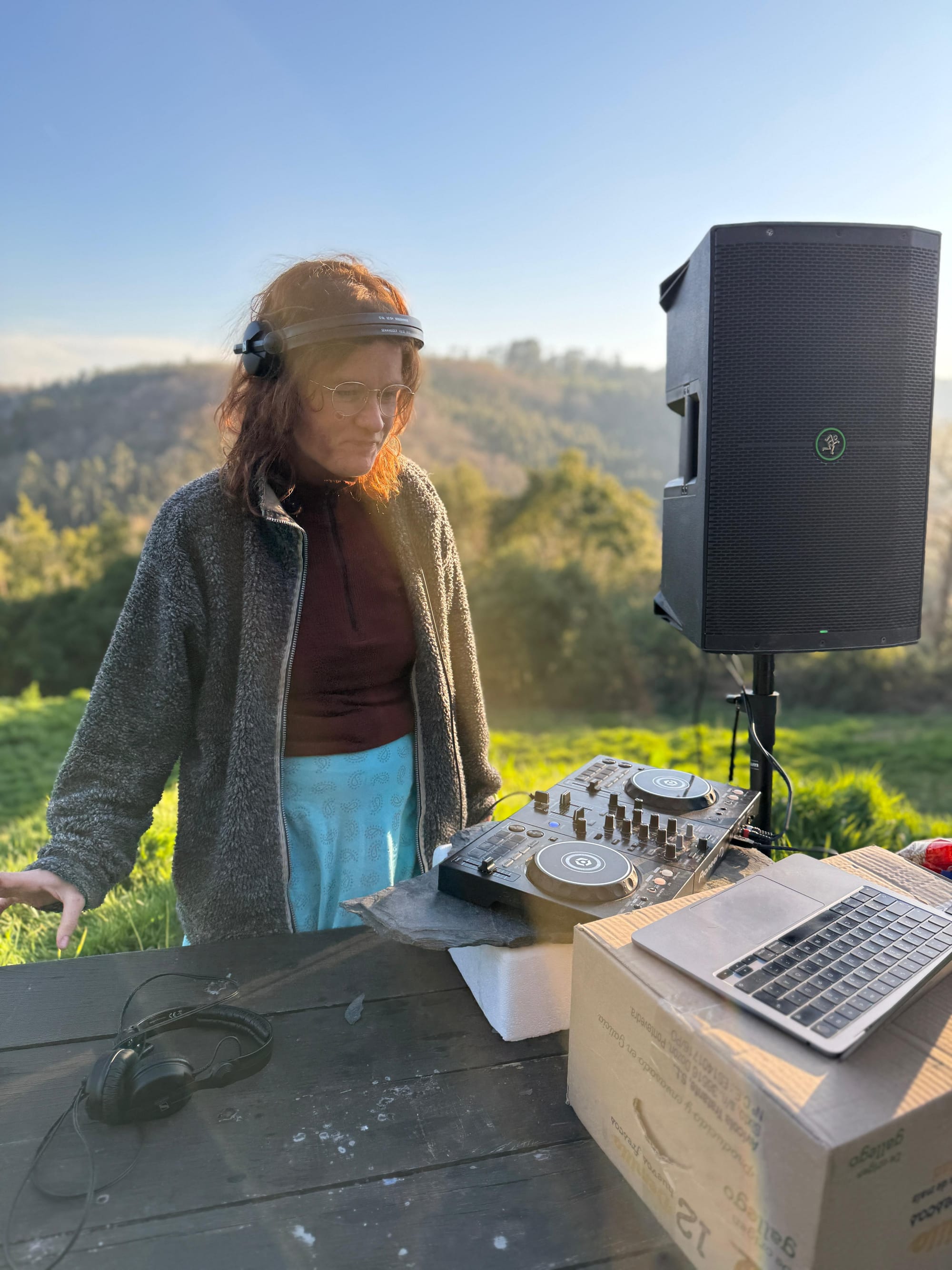
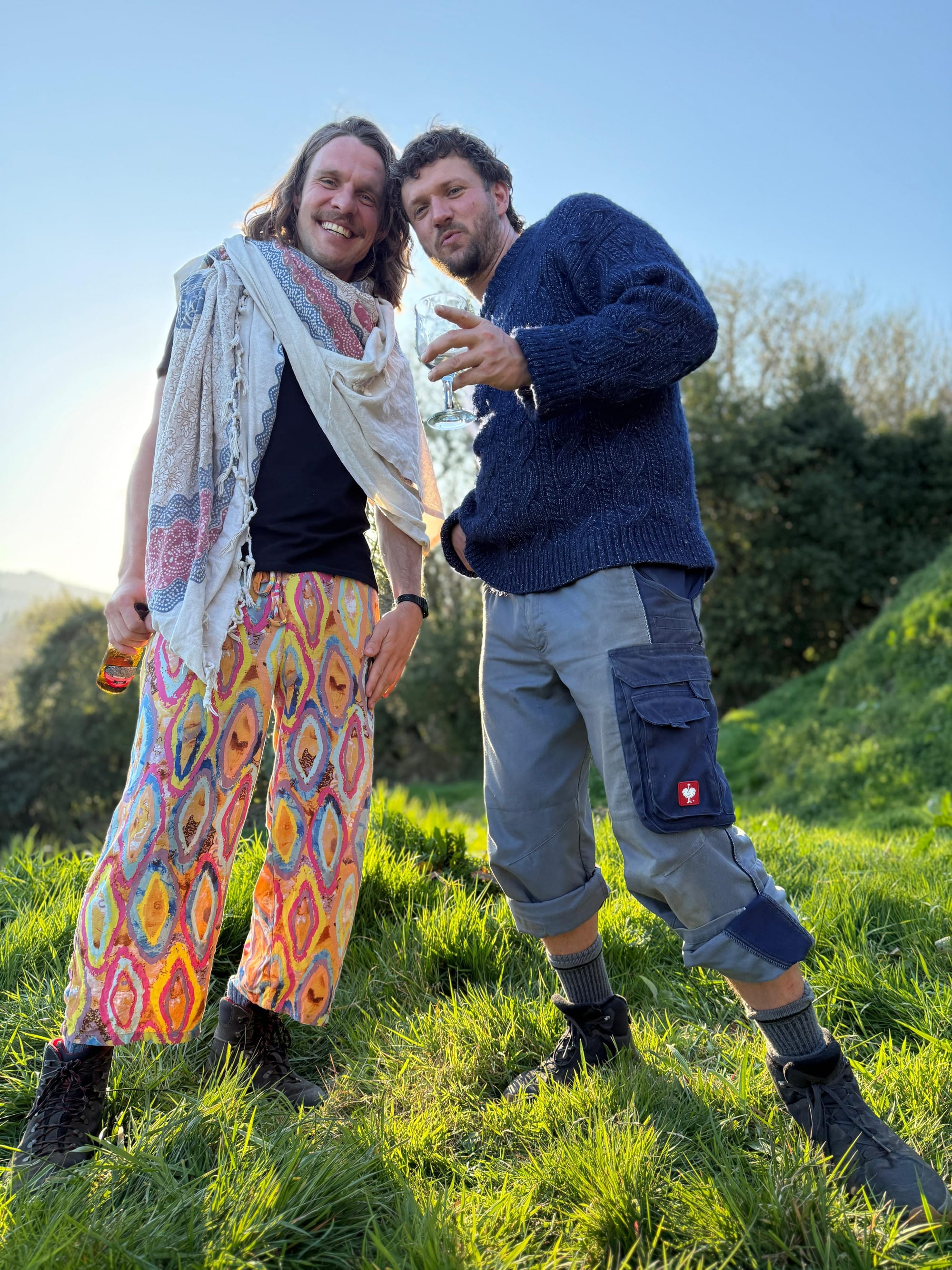
Thanks for the pictures, Damon & Sonja :)
Feeling free & with agency
With self-responsibility comes freedom, too. I feel like I have more choices here than I used to in an apartment in the city. I can choose to do or create anything on the land that is in line with the vision of the village and doesn’t take away the freedom of others.
Before, I felt like a passive observer of the climate crisis, even though I already worked in the “impact space”. Now, I actively plant agroforestry systems that improve biodiversity, soil health, water retention, and the absorption of CO2.
And there is so much more opportunity. Just time is missing. So I take it step by step. Pouquiño a pouqiño :)
For the lack of a better word, it feels... powerful.
More creation than consumption
It's harder to consume here due to three reasons:
- The next supermarket is 20 minutes by car (yes, for a fully degrowth life, this will be a half a day horse ride ;-) )
- Online deliveries often don’t arrive or need to be picked up somewhere
- Mobile internet connection does not exist on some parts of the land.
In the beginning, it was a bit annoying. Now I see it as bliss.
I learned that I need less than I thought.
Often, when I feel the need to consume something, I realise that I need some form of stimulation, which can be building a stone wall, digging a new garden bed or simply a good conversation with someone in the community.
With less opportunity to consume, I have more space to create. And with that comes a different fulfilment.
Reducing stimulation brings more clarity and priority
Without noise and light pollution, my nervous system feels calmer. When I get up, the only thing I hear in spring now is the voice of the birds.
There is still a lot going on with the community, neighbours, and local events, but I have an increased sense of clarity and priority.
And that feels incredibly productive. But not in a stressful way. More in a “the direction is the right one, and I can walk slowly" kind of way. No need to sprint. When working with nature, you can’t rush things.
Going back to a city feels stressful now. But I still do it to see my family and old friends.
Appreciation for nature & ecological farming
“Despite all our accomplishments, we owe our existence to a six-inch layer of topsoil and the fact that it rains.” – Paul Harvey
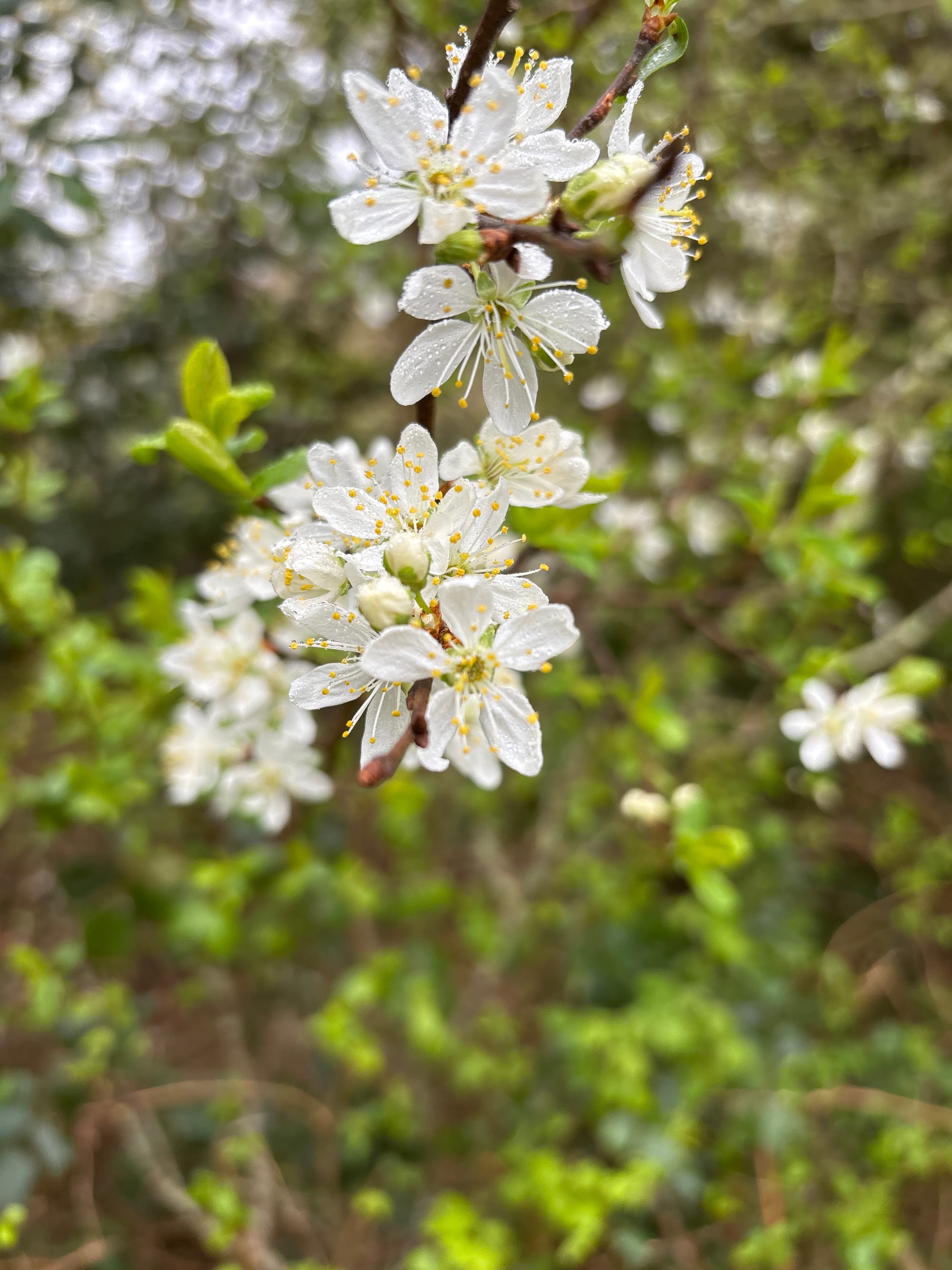
Living in nature helps me understand the intricate processes of life I am part of, and I have much more to learn. Composting, water flows on the land, and how the seasons influence the growth and decay of the nutrient cycle. And that’s just scratching the surface.
Then I am learning how to grow vegetables. It’s not easy if you do it without synthetic inputs. You need the right soil, conditions, look out for snails, and much more.
Luckily, we have Walter here who has been doing permaculture work for 35+ years without any machines or synthetic inputs. It’s like learning from a wise elder.
I am left with appreciation for nature, and that fulfils me with motivation to work towards a future where we stop destroying it for economic gain.
Learning as stimulation
When we look for stimulation while living in the city, it’s often the smartphone that we whip out. Here, I intentionally leave the smartphone in the caravan. I am regaining the ability to focus longer on things that give me more fulfilling stimulation.
Maybe it’s learning how to build with natural materials or observing the land and finding a new plant. Stimulation levels might be lower than a colourful screen, but the depth is remarkable.
There is so much to learn: making stone walls, building my own house, designing the waterflows on the land, tending the community process, making a holistic plan with the community for the 20 ha, old traditions of cheesemaking or what to cook with local foods.
And there is the bioregional layer: building a network of aligned projects to impact the region towards regeneration in the coming decades.
I will learn till I die. :)
Feeling healthier and more alive
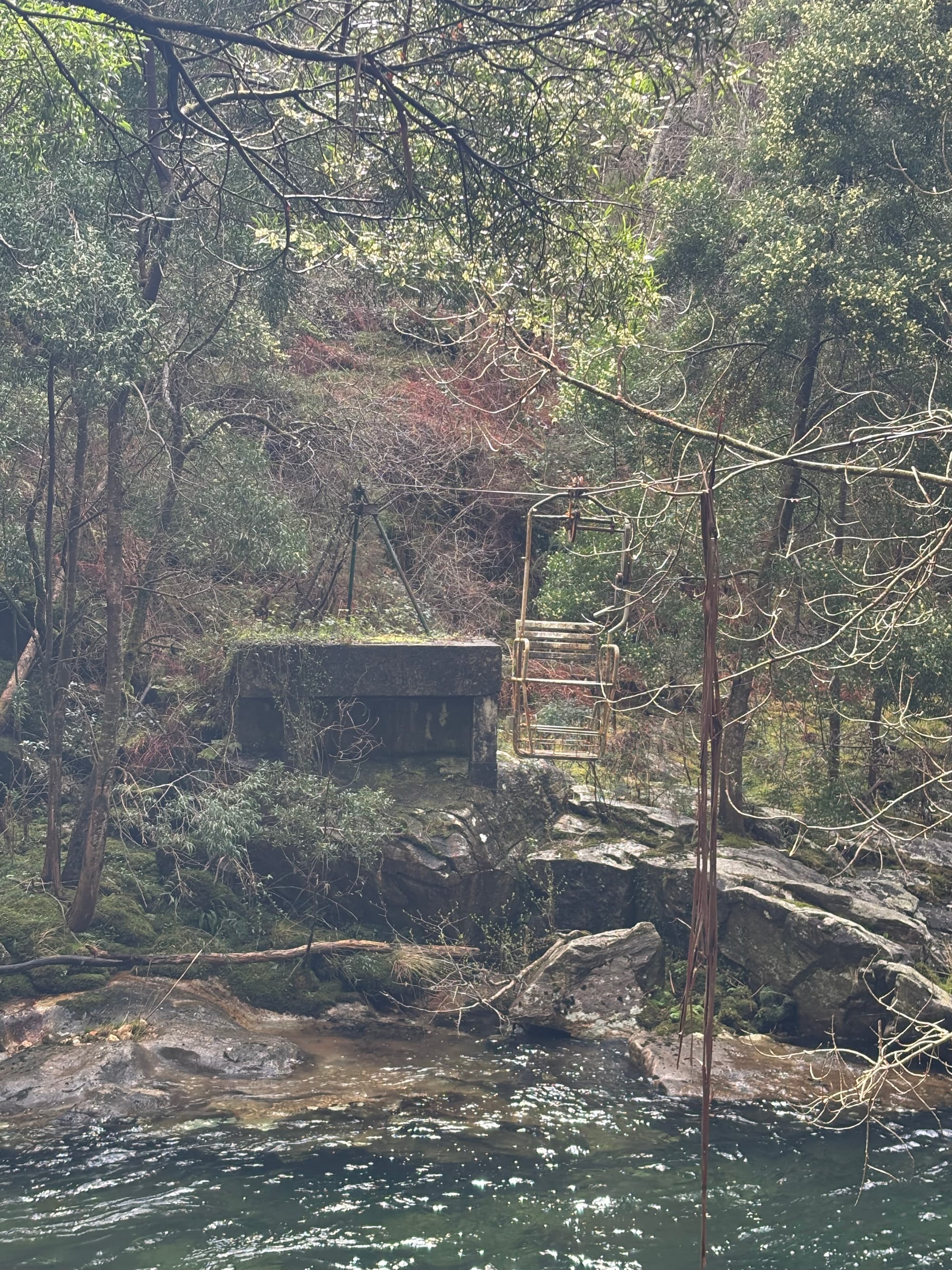
The gym is just a step into the garden, and picking up a hoe or making firewood. I am outside every day when it’s not pouring rain. Even during my sporty 20s playing Lacrosse I have not felt that alive, fit and powerful.
When my dad told me when I was younger that his cutting and chopping wood was like a gym, I laughed. Now I am doing the same. Funny.
In a transition to a degrowth future, I can see this balance of a few hours of screen time and a few hours of physical community work as a great model that helps humanity reclaim better mental and physical health.
Less worry, more purpose
I used to be worried about the world, and there are still times when I am.
But here I feel more grounded and purposeful in stewarding the land and being active on the local level, and also, remotely on the European level in the work of place-based regeneration.
For the first time, I am thinking more positively about having kids in this crazy world.
Research shows that a walk in nature reduces depression, worry and other mental challenges. So I guess you can say that living among oaks is impacting my mental health positively.
Learning about living in a community
In an individualistic culture, you just buy something when you need it. Here we buy it once and share it among many.
Where you normally would hire someone, here you ask someone for help.
We didn’t really know how to build community, but my partner has found the “Community Compass” from Eva Stützel (an experienced ecovillage building practitioner), and we are leading the community through it.
We create more cohesion and coherence. There is still a lot to do, and a lot of it requires unlearning how we behaved in an individualistic society.
There are polarities of intuition and thinking, structure and chaos, doing and planning - but everything is important and has its place.
I am learning that community is the biggest catalyst for personal growth.
Challenges
Yes, a less materialistic life in a community is great. But it is not all blissful.
This winter was tough when we had little firewood. We spend a lot of time on meeting our basic needs. But we got through it and learned from it. Trust me, this summer we will cut and chop all the fallen trees until we are fully set for the next few years.
Then language is an issue for some of us. I am lucky to already speak Spanish, but the level can still be improved. And then there is the Galician language of “Gallego” that I don’t speak yet, but a lot of local people value it. So yes, it’s something that comes step by step while wishing you would already be perfectly speaking it.
Lastly, building community structure is also not easy. We are going through the transition from no structure at all to growing the team and needing more organisation because of that. We are overcoming the individualistic programming, need to decide on decision-making models, and research legal structures that make the land unsellable. It’s a lot of work that goes into it. But the more we build this scaffolding, the less we have to work on it later on. But right now, it’s a challenge to balance the head-heavy organisation meetings and a flowy do-as-you-wish mentality.
Overall, I am experiencing that less is more and that most of my needs can be met non-materially.
Society is approaching a point at which we will no longer be able to live in the contradictory space between capitalist growth and a desire for sustainability.
We can either destroy what’s left of our global environment in a quest for the last bits of extracted wealth, or transition to a degrowth or regenerative society based on community, mutual aid, and collective production.
I hope this gave you some idea of the degrowth or regenerative life in practice.
Let me know if you want me to explain something more in depth :)
Happy regeneration,
Jonas

A Regenerative Life Newsletter
Join the newsletter to receive the latest updates in your inbox.
![What 24 Bioregions Taught Me About Weaving, Wisdom and Listening [#37]](https://storage.ghost.io/c/12/0d/120d7bfc-0faf-4c69-90a4-a665ade6efdd/content/images/size/w1460/format/webp/2026/09/Bioregions-Europe-Overview.jpg)
![10 Beliefs About the World That I Relearned in the Last 5 Years [#34]](https://images.unsplash.com/photo-1758685733627-683c357fe94e?crop=entropy&cs=tinysrgb&fit=max&fm=webp&ixid=M3wxMTc3M3wwfDF8c2VhcmNofDQyfHx1bmxlYXJuaW5nfGVufDB8fHx8MTc4MDU1ODA1Mnww&ixlib=rb-4.1.0&q=80&w=1460)
![Becoming a Bioregional Weaver – The Why, How It Started, and How It’s Going [#31]](https://images.unsplash.com/photo-1593671186131-d58817e7dee0?crop=entropy&cs=tinysrgb&fit=max&fm=webp&ixid=M3wxMTc3M3wwfDF8c2VhcmNofDl8fHdlYXZpbmd8ZW58MHx8fHwxNzc3NDUzNzA1fDA&ixlib=rb-4.1.0&q=80&w=1460)