Eucalyptus Monocultures and a Paper Factory – Practical Examples of Systemic Thinking [#27]
What 2 older guys from Galicia taught me about system change

![Eucalyptus Monocultures and a Paper Factory – Practical Examples of Systemic Thinking [#27]](https://images.unsplash.com/photo-1545987796-200677ee1011?crop=entropy&cs=tinysrgb&fit=max&fm=jpg&ixid=M3wxMTc3M3wwfDF8c2VhcmNofDJ8fHN5c3RlbXMlMjB0aGlua2luZ3xlbnwwfHx8fDE3NzMzMTA5NTh8MA&ixlib=rb-4.1.0&q=80&w=1460)
Table of Contents
Over the last few years, I have started to go on walks more regularly. Whether I feel down or carry too much in my head, a good walk in nature usually solves it. Here in my new place in Galicia, I feel lucky to walk close to a nearly untouched river, the Rio Sor.
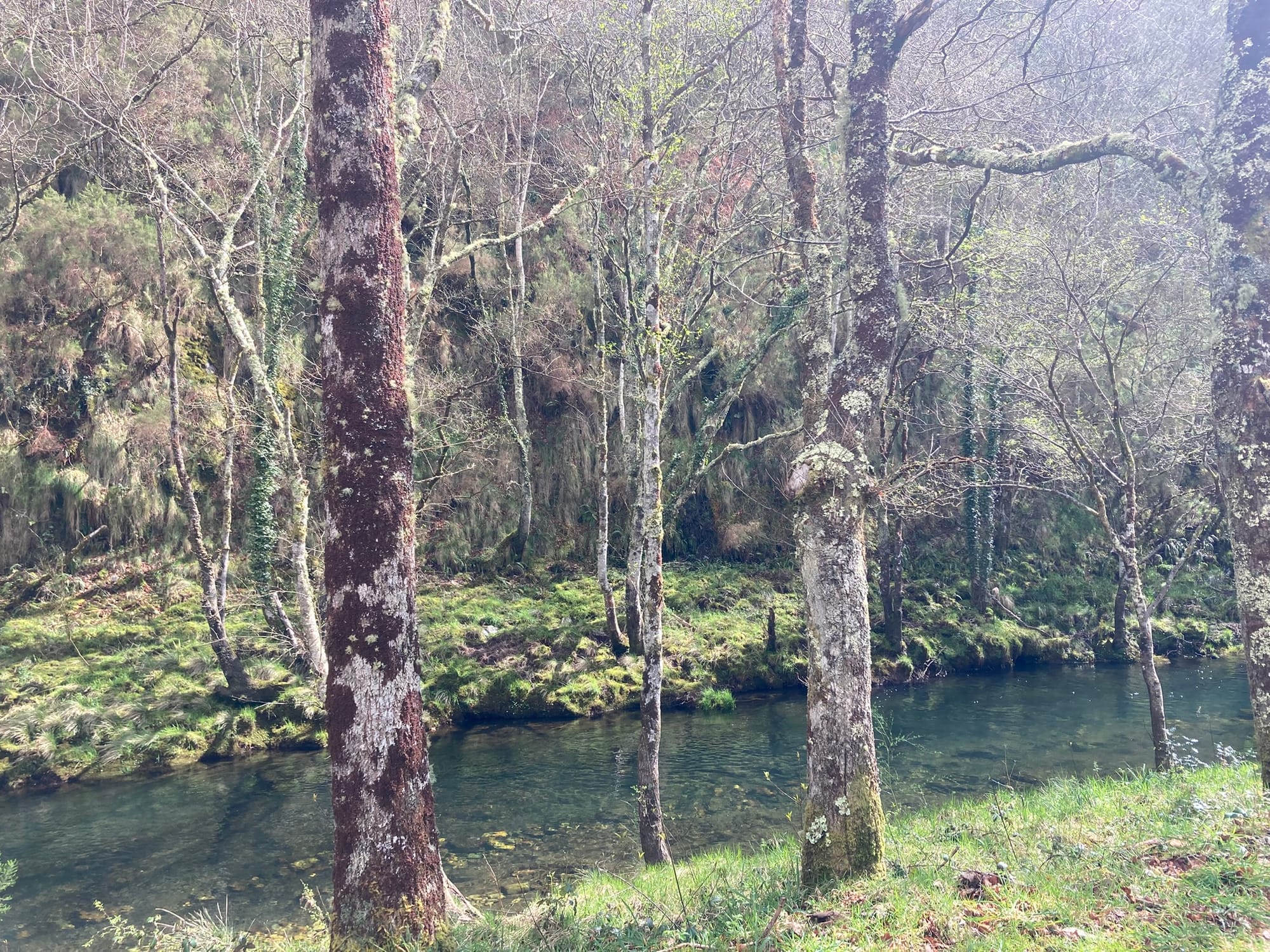
On a walk the other day, I met two older guys from a nearby city, and we started chatting. They told me how the land has changed, how they used to have these gigantic oaks and chestnuts, and how they were cut down to make space for more Eucalyptus monocultures. In that moment, it seemed like they were grieving the beauty of the past.
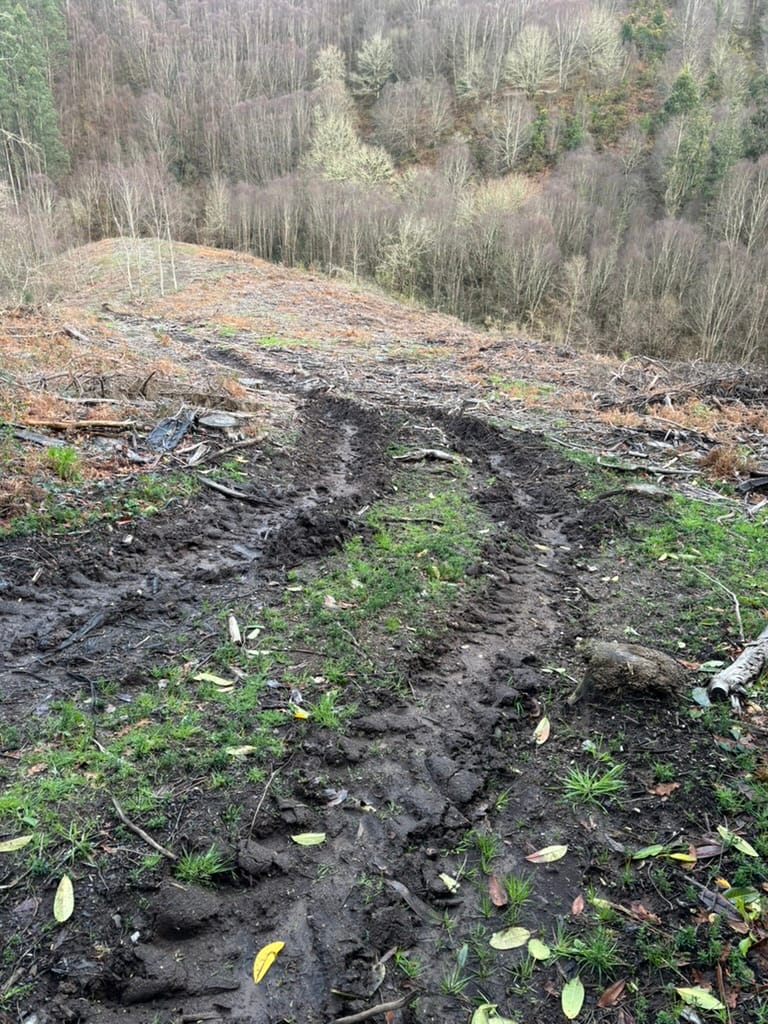
These monocultures cover 20% of Galicia and are mainly used to make paper and cellulose. Eucalyptus in monocultures can behave invasively, dries out the soil, suppresses local species, doesn’t offer any nutritious value to local animals, and cutting it down with big machines destroys the soil.
(Here you can see a recently harvested Eucalyptus plot close by that was now bought by Sylvester Rewilding - a partner organisation of our project that makes it possible for everyone to invest in rewilding. Check them out!)
At some point, the two guys asked me what I was working on, and I told them I work online and enjoy the balance of working online and offline on the land. They then said that there will be opportunities in the nearby city to work because they will build a paper factory there.
I then asked them if they will cut more oak and chestnut forests for more Eucalyptus monocultures when the factory is built. They then looked at me like I was from Mars. It seems like they could not make the connection between a new paper factory and new Eucalyptus monocultures.
This experience showed me how little systemic thinking is prevalent in the general public.
I deeply believe that thinking in systems over longer periods of time is the revolution of our time.
In the 8th edition of this newsletter about "10 Personal Qualities That Can Change the World", I touched briefly on the topic and feel like it’s time to go a little deeper. Here are 2 practical examples of systems thinking or wide boundary thinking.
The Pine Cone Exercise
Choose an object of interest. In this case, I chose the pine cone random example. You can use pretty much any item for this exercise, e.g., a piece of paper, your morning coffee, or other things.
The goal of this exercise is to understand how everything is connected.
To get started, ask the question: What has contributed to the existence of this pine cone?
In the first round, you might answer: the tree, the sun, water, air, nutrients.
In the second round, you ask again: what has contributed to these preconditions for the pine cone to exist?
The answer might be: the previous pine cone that grew the tree, the clouds that made the rain, the star collision that made the sun, the web of life filtering water, air, and providing the nutrients.
Then you do another round, and you might get to answers like: the conditions that were around for the stars to collide, the atoms or electrons that form the web of life, etc. In short, everything has contributed to this pine cone.
This is a practical exercise to help someone in their first steps of systems thinking without using the complexifying word of “systems thinking”.
It embodies asking for the 2nd, 3rd, and 4th order effects for something to happen or the results of something happening. Try it with something else.
Oil & the Street of Hormuz
20% of the world's crude oil & gas usually ships through the Street of Hormuz, the tight stretch of the Persian Gulf between Oman and Iran. Due to the geopolitical mess happening in the region, this street is currently clogged.
A narrow boundary view says that energy prices will go up a bit now, and then there will be new sources of oil from other places to replace this.
A wide boundary view or systemic perspective sees that oil is tied to 100% of our economy and that oil resources are limited. And it’s more than just oil. For example, during the refinement of oil, sulfur is created as a by-product, which is needed for the production of copper. Copper is the main ingredient in power lines and other electronics. So 20% less oil means 20% less copper production. And copper production has already been slowing down.
Let's see how that will impact the build-up of AI Datacenters.
Then the production of fertilizer for our industrial food system is dependent on natural gas. 20% less natural gas means 20% less fertilizer, which will cause a disrupted food system and potentially a famine in many places. This will then cause political turmoil.
You see what I am saying?
Most of us see the world linearly. If this, then that. But the world is more complex than this. There are 2nd, 3rd, 4th order effects and then n-th order effects on what happens upstream and downstream from any action.
In a system that is 100% reliant on oil, this event will send shockwaves all over the globe.
I hope it makes us aware of how fragile our global economic system is and that it changes our beliefs around endless growth on finite resources.
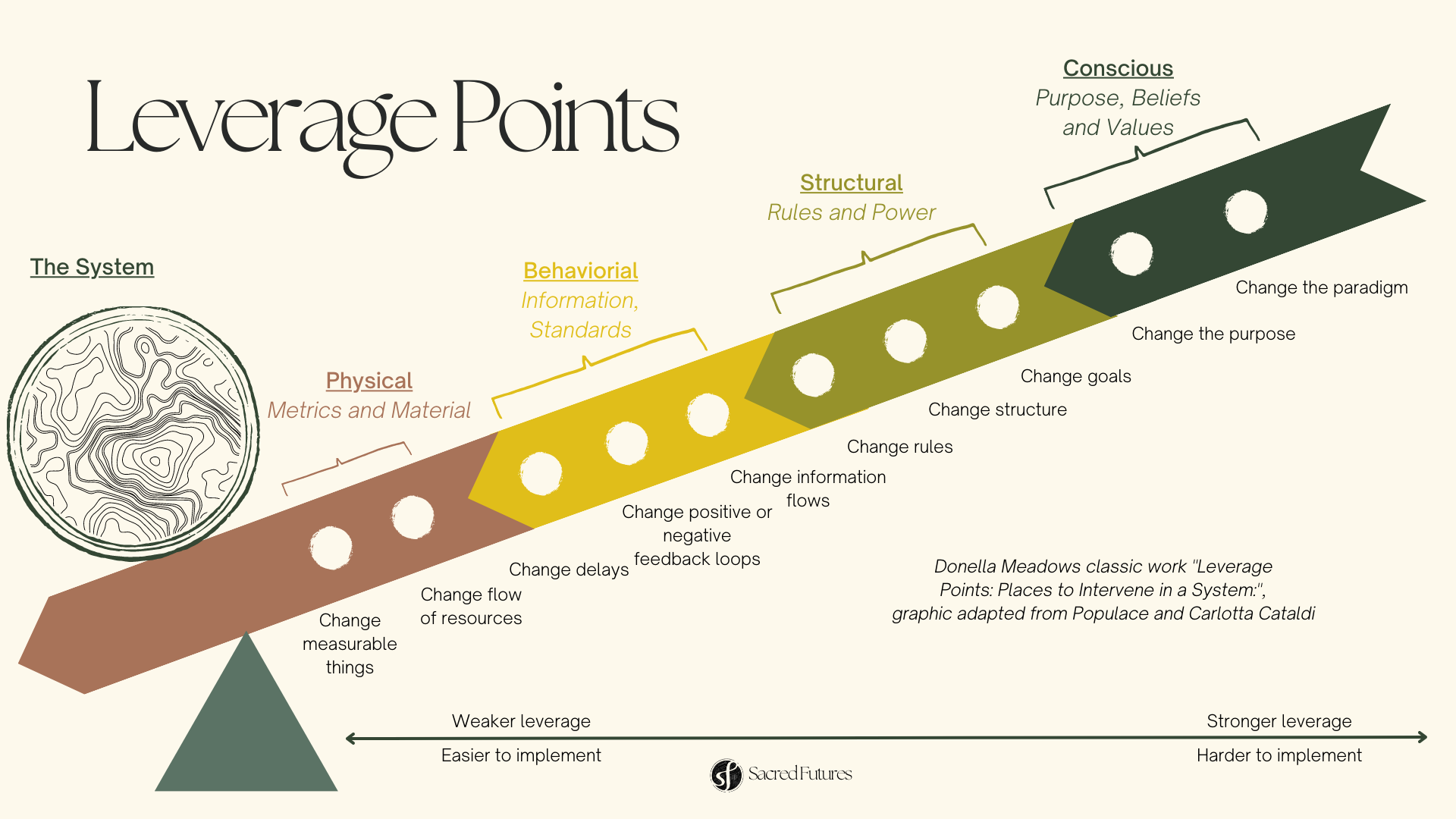
If you look into how to change systems, the strongest leverage is changing the paradigm and beliefs. And it’s also the hardest. But with shocks to the system that we are seeing right now, more people will become aware of the biophysical limits we are hitting.
I believe the result will be a refocusing on meeting human needs locally within the bioregions we inhabit.
The good thing about it is that any of your actions can have a positive n-th order effect, too.
For example, if you share this newsletter with someone, it might change their paradigm about the world. They will tell people about the predicament we are in in relation to oil and start doing things differently. And then they tell others, and it will impact their mindsets.
And that's just one of the million things you can do to change the system for the better.
What are the 2nd, 3rd, and 4th order effects downstream of your current actions? What is one little thing you can do to create a positive effect downstream?
Happy regeneration,
Jonas
A Regenerative Life Newsletter
Join the newsletter to receive the latest updates in your inbox.
![The World Needs More of These People – How To Become a Changemaker? [#26]](/content/images/size/w1460/format/webp/2026/03/photo-1761001316126-d002503003da.jpeg)
![The Revolution Begins in the Garden [#13]](/content/images/size/w1460/format/webp/2025/11/photo-1659822887922-c1386185cc6b.jpeg)
![Personal Qualities That Can Change the World [#8]](https://images.unsplash.com/photo-1645585261826-70b8889d3db5?crop=entropy&cs=tinysrgb&fit=max&fm=webp&ixid=M3wxMTc3M3wwfDF8c2VhcmNofDY2fHxwZXJzb25hbHxlbnwwfHx8fDE3NjExMjQ5MTd8MA&ixlib=rb-4.1.0&q=80&w=1460)