Cultivating Resilience in Changing Times [#24]
5 ways to deal with the future

![Cultivating Resilience in Changing Times [#24]](/content/images/size/w1460/2026/02/photo-1678363472234-973012eb74f8.jpeg)
Table of Contents
We have lived years of convenience and excess. Cheap food, economic growth, peace, and stability. Most people believe it will keep going that way.
But I see something brewing on the horizon.
Energy prices, cost of food, cost of shelter - everything seems to get more expensive.
Geopolitical tensions, war, corporate greed, biodiversity collapse and more extreme weather are impacting prices around the world.
We can expect prices to keep going up as pressures on the system increase.
For example, ExxonMobil, one of the world's oil companies, projects worldwide oil reserves to decline by 15% every year from now until 2030. We are burning 30 billion barrels of oil every year, but we are just discovering reserves at 8 billion per year. You can do the math on that.
We can discuss how fossil fuels are impacting Climate Change, and yes, that’s bad, but there are more immediate consequences.
If oil becomes scarce, prices will go up.
That will lead to fossil-based transport becoming more expensive.
And in a globalised world where most transport is still fossil-fuel based (meaning most of the goods in your local supermarket are shipped, trucked or flown over the world to get to you), prices will be rising significantly if that happens.
Think renewables & electronic transport are the solutions to this dilemma?
What to do about that?
I am not sure where you are on the socioeconomic scale, and if you are currently struggling to make ends meet or if you are well off. So take these recommendations with a grain of salt and see how you can adapt them to your context.
Take stock of where your money goes & drastically lower life expenses
I think a crucial life skill that leads to more personal freedom and resilience is the ability to live with less.
I conducted a few experiments in this regard. I have lived on as little as 500 EUR a month, and I had a city life with 3000 EUR available every month. In the first scenario, I had no job and a lot of free time. In the second scenario, I was working 40+ hours every week.
Guess, when I felt my life was more joyful?
“Wealth is found not in what you own but in how you spend your time.” - Henry Thoreau
A good way to start is to take an inventory of where your money goes. The simplest way is to start an Excel sheet with columns for every month and lines for different spending category or use a budgeting/ personal finance app.
Then do this: Go one month, entering all of your expenses. Start with subscriptions and other monthly obligations. When you pay cash, get a receipt and save it in your wallet. Every Sunday, sit down to go through your receipts, bank accounts, online payment systems, and write down what you paid where.
Add new categories in your sheet if they are missing.
At the end of the month, you will have a pretty clear picture of where your money goes, and it will be quite an eye-opener.
Now that you created awareness, you can decide to take action towards lowering your life expenses.
Any subscription that you are not really using anymore? Cancel it.
Are you paying any company that is not acting according to your values? Change it. (Put an emphasis on American companies financing and supporting the authoritarian and fascist agenda of the Trump administration.)
Shopping a lot recently? Reflect if you really need it.
What are you buying just because of the emotional marketing? Question that.
Buying things that you don’t need to impress others? Reevaluate your values.
Need to buy anything in the next few months? Check 2nd hand shopping apps.
Some services seem fairly expensive? Change it to a cheaper option.
When I started, I learned that I spent too much money on food deliveries. Now, having done it for 6 years, I can say with confidence that it will change your life. I kept refining the categories of spending and aligned them towards my values. Now I can see how much I spend on e.g., learning vs. consumption.
This is not just lowering life expenses, it’s simplifying your life.
Removing obligations that create headaches will make your life simpler so you can focus (and spend money) on what’s really important to you.
It also makes you more resilient in changing times. If you have more flexibility with your expenses, you can stomach a 20% increase in costs that might happen due to oil becoming more expensive.
Work less
The 40-hour work week is a relic of the past. In 1915 a economist predicted that if we keep becoming more efficient at the rate of change during that time, we would only need to work 15 hours a week in 2000.
What has happened?
The efficiency gains have been transferred into “shareholder value” - not into improving the lives and wages of workers.
So, if you have the chance to lower work hours at your job, do it.
It will have a significant impact on your personal well-being.
Ideally, you will start to work only 4 days a week, having an extra day for yourself to run errands, learn more about how to exit or change the system, learn new skills, or just rest.
In a world that makes you think your self-worth is tied to your productive output, rest is an act of resistance.
The impact of working less is profound:
- Reducing greenhouse gas emissions and energy use
- Reducing income inequality and gender imbalances
- Improving health and reducing overconsumption of food (by replacing work with sleep!)
- Contributing to personal, family and community well-being and decreasing the importance of materialistic values
Practice voluntary discomfort
With ever increasing convenience, we have become spoiled brats. We have everything available for delivery to our house with the click of a button. We have a whole digital industry that cares for our hedonic happiness and dopamine release.
While these perks are nice-to-haves, they make you dependent on the system.
I remember when I used to order food delivery all the time and got so used to it that I became too lazy to cook something for myself.
The antidote here is to voluntarily give up some of these comforts. It is a practice the Stoics used to increase happiness, discipline, confidence, self-discovery, gratitude and resilience.
It's simple but not easy: get uncomfortable and forgo pleasure.
Take cold showers, give up social media for a week, quit your Netflix subscription, and commit to not ordering food or fasting for a few days.
You don’t build resilience by feeling good all the time. You build resilience by getting better at feeling bad.
Becoming comfortable with being uncomfortable is a straightforward way to increase resilience in changing times.
Build community and localization
So we know that prices will go up mainly due to increased transport costs. That means that localization can be a way to counter this trend.
Maybe you could get people together to start a repair cafe, so you don’t have to buy new things all the time.
Maybe you can start a community garden around where you live?
Maybe you can share tools or a washing machine?
I’m just hypothesising here. This, of course, depends on your circumstances.
But what is clear to me is that building community and networks of trust are key to exiting the rat race and improving resilience.
Extractive economic systems make more money if you are broken down, isolated, and competing with others.
Small local networks of solidarity lay the groundwork for the collaboration necessary to depend less on the system.
Here is a great podcast about “2000 Watt Societies” - well worth your time.
Lower energy lifestyles are highly correlated with greater levels of well-being.
(Just for perspective, we currently live 7,000-Watt lifestyles in Germany and 10,000-Watt lifestyles in the USA.)
Also, think about what skills you feel excited to learn that could benefit your community in the future of energy poverty?
Check out the eco-village building movement
Changing where you live is a more radical change and not possible for everyone. However, I am seeing a significant spike in interest for other ways of living, like in an eco-village.
Mainly due to the meaning, freedom, security, and connection it provides.
Eco-villages get your needs met while providing a beautiful living space and leading to lifestyles in line with nature and planetary boundaries.
You might hold stereotypes against eco-villages, so I invite you to challenge them through experience.
Check out the GEN Ecovillage Network map - maybe there is an ecovillage close to you? They often offer tours.
Village life provides a genuinely better lifestyle than what is lived by the vast majority of people today: one with less bullshit work, less material and energy footprint, more personal freedom, greater mental health, better physical health, and much stronger social connections.
It will require adaptation, too.
But maybe it is worth it? :)
Hope all is well!
Big hug and happy regeneration,
Jonas
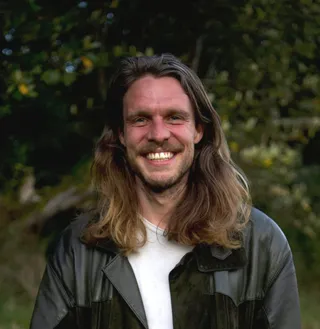
A Regenerative Life Newsletter
Join the newsletter to receive the latest updates in your inbox.
![The World Needs More of These People – How To Become a Changemaker? [#26]](/content/images/size/w1460/format/webp/2026/03/photo-1761001316126-d002503003da.jpeg)
![What Is the Role of Humans in the World? [#25]](/content/images/size/w1460/format/webp/2026/02/photo-1520961958148-c0d0d0cf41f3.jpeg)
![What Happens When You Move to the Countryside Into an Abandoned Village? [#22]](https://images.unsplash.com/photo-1767884163857-7e9cba305466?crop=entropy&cs=tinysrgb&fit=max&fm=webp&ixid=M3wxMTc3M3wwfDF8c2VhcmNofDEyfHxhYmFuZG9uZWQlMjBzdG9uZSUyMGhvdXNlc3xlbnwwfHx8fDE3NzAyMzIxMTF8MA&ixlib=rb-4.1.0&q=80&w=1460)
